
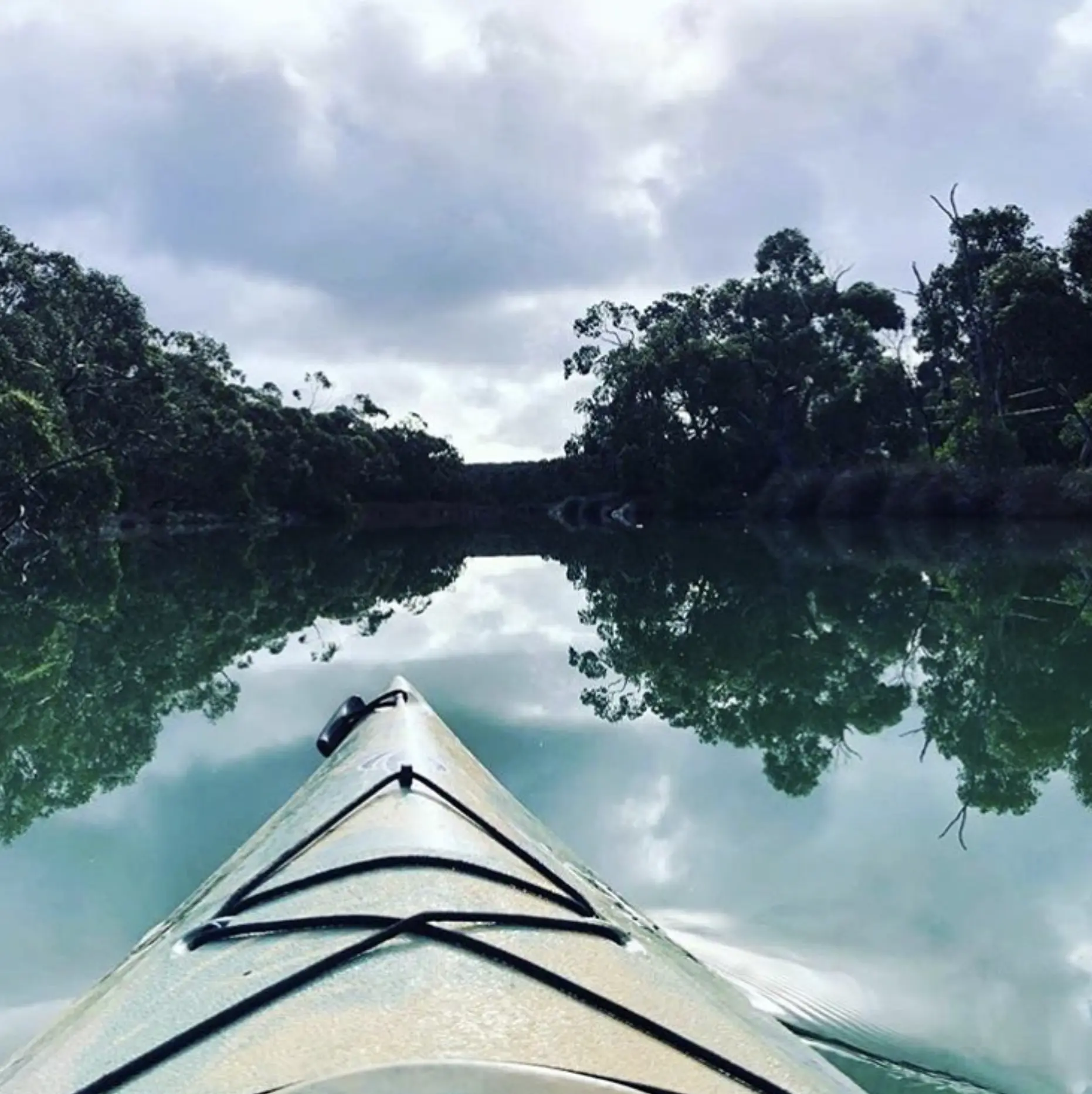
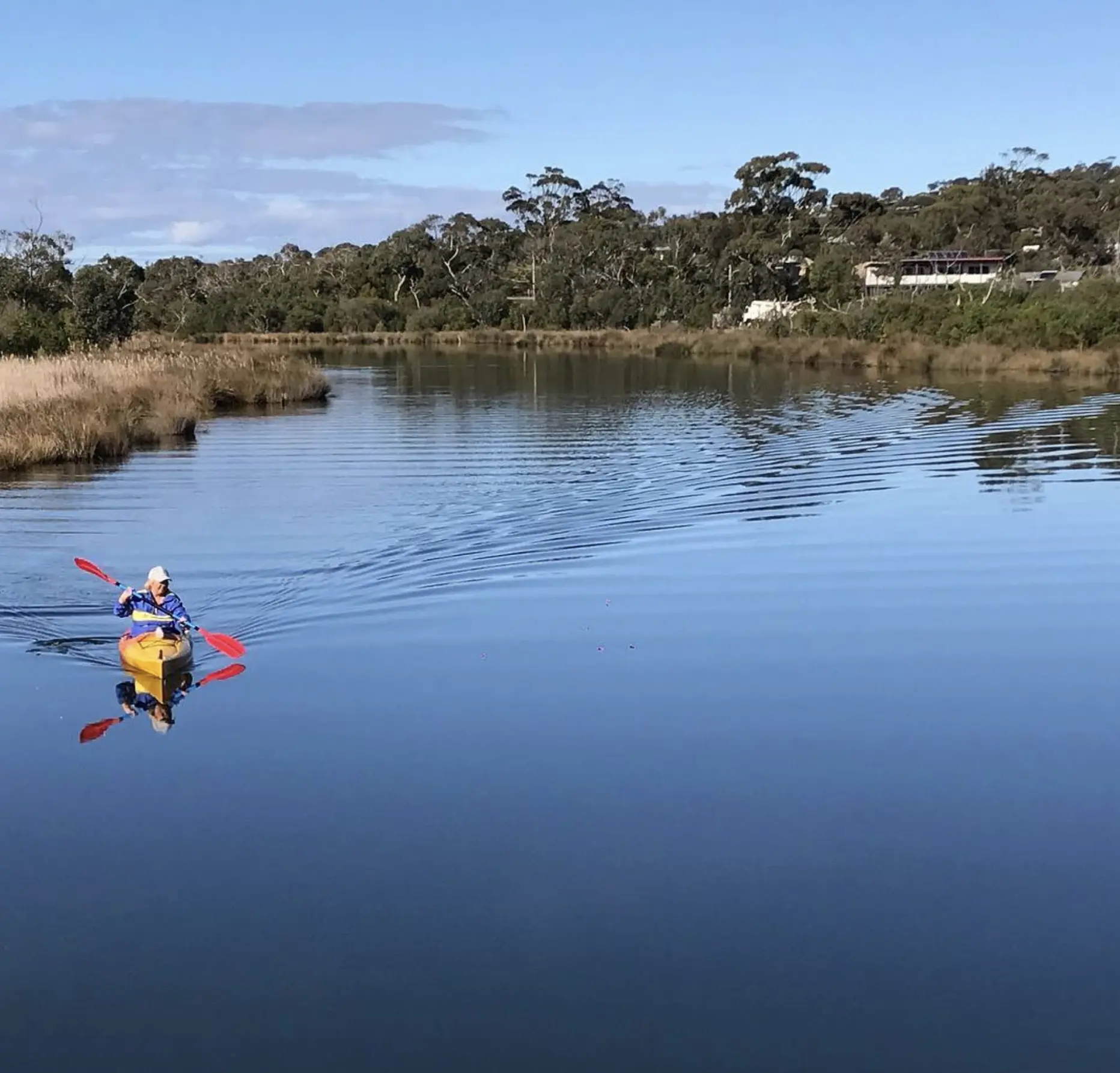
Great Ocean Road tell you to slow down, and paddling the Anglesea River is one of them. The water is calm, the wattlebirds are chattering from the river banks and beyond the dunes, you can just hear the ocean rolling in from Anglesea Main Beach. On my first kayak on the Anglesea River, I realised this spot isn’t just another stop along Victoria’s Surf Coast — it’s an escape into nature that reminds you how good it feels to move at your own pace.
You’ll pass paperbarks, spot Eastern Grey kangaroos near the golf course and glide through hidden creeks that few visitors ever notice. It’s the kind of refreshing escape that recharges you before hitting the bustle of Bells Beach or Lorne Beach further up the coast.
The Anglesea River winds through coastal bushland that still hums with the life of Wadawurrung Country. Locals will tell you the estuary’s moods change daily — mirror-flat one morning, tide-pushed the next — but always inviting.
The upper reaches are flanked by she-oak and paperbark, while the lower river blends seamlessly into the tidal flats near the surf beach. Early morning light sets the water gold, and by afternoon, the sea breeze usually ripples the surface into a gentle chop. If you’re lucky, you’ll spot cormorants sunning on fallen branches or a pair of black swans gliding through the reeds.
Anglesea isn’t a big river, but that’s part of the charm — you can explore most of it in half a day, making it perfect for beginners or families who just want a quiet paddle with a chance to stretch their arms and their souls.
I’ve collaborated with Great Ocean Road Tours Australia and seen everyone from first-timers to experienced paddlers find their rhythm among these beautiful Australian bushland vistas.
Finding the right spot to launch makes all the difference between a cruisy start and a soggy comedy act. Luckily, Anglesea has a few easy access points.
Main Riverbank Reserve (Baldwin Road): Right next to the pedestrian bridge. Sheltered, flat bank and parking nearby — perfect for sit-on-tops or small inflatables.
Anglesea Boat Ramp (below the caravan park): A concrete ramp with good water depth at mid to high tide. Good if you’ve got heavier kayaks or a tinnie in tow.
Coogoorah Park: A secret spot behind the town centre. The calm backwaters here are great for beginners and families — no current, no stress.
Under the Great Ocean Road Bridge: Best at high tide, as the shallows can turn to mudflats at low water. Quick access to the lower estuary.
|
Launch Point |
Access Type |
Best Tide |
Skill Level |
Notes |
|---|---|---|---|---|
|
Riverbank Reserve |
Sandy bank |
Any |
Beginner |
Easy parking, grassy picnic area nearby |
|
Boat Ramp |
Concrete ramp |
Mid–High |
Intermediate |
Watch for motorboats on weekends |
|
Coogoorah Park |
Flat grass |
Any |
Beginner |
Family-friendly, sheltered |
|
Great Ocean Road Bridge |
Mud/sand |
High |
Intermediate |
Shallow at low tide, scenic route |
For those dipping their toes in — literally — Anglesea’s got all sorts of adventurers covered. Whether you’re a kayak enthusiast looking for peace or a visitor adding a quick paddle to a Great Ocean Road trip, there’s a route for you.
1. Coogoorah Park Loop (1–1.5 km)
Explore the calm canals and secret spots behind the park. Great for school groups or community groups, wildlife viewing without leaving the visitors centre area.
2. Anglesea Bridge To River Mouth (2 km Return)
This scenic route passes mangroves and river banks full of native plants. On a calm day, it’s perfect for beginners, but the cool water will wake you up faster than a double shot of espresso.
3. Upper Reaches (Upstream Of Coogoorah Park, 3–4 km Return)
This route winds through hidden creeks and tighter bends surrounded by Australian bushland. Watch out for low branches and basking Eastern Grey kangaroos — they’re the unofficial guardians of the upper track.
Each route can be done in an hour or two, so it’s easy to fit into a day trip along the Great Ocean Road. Bring a snack, a hat and plenty of water — the sun bites even when the wind’s cool.
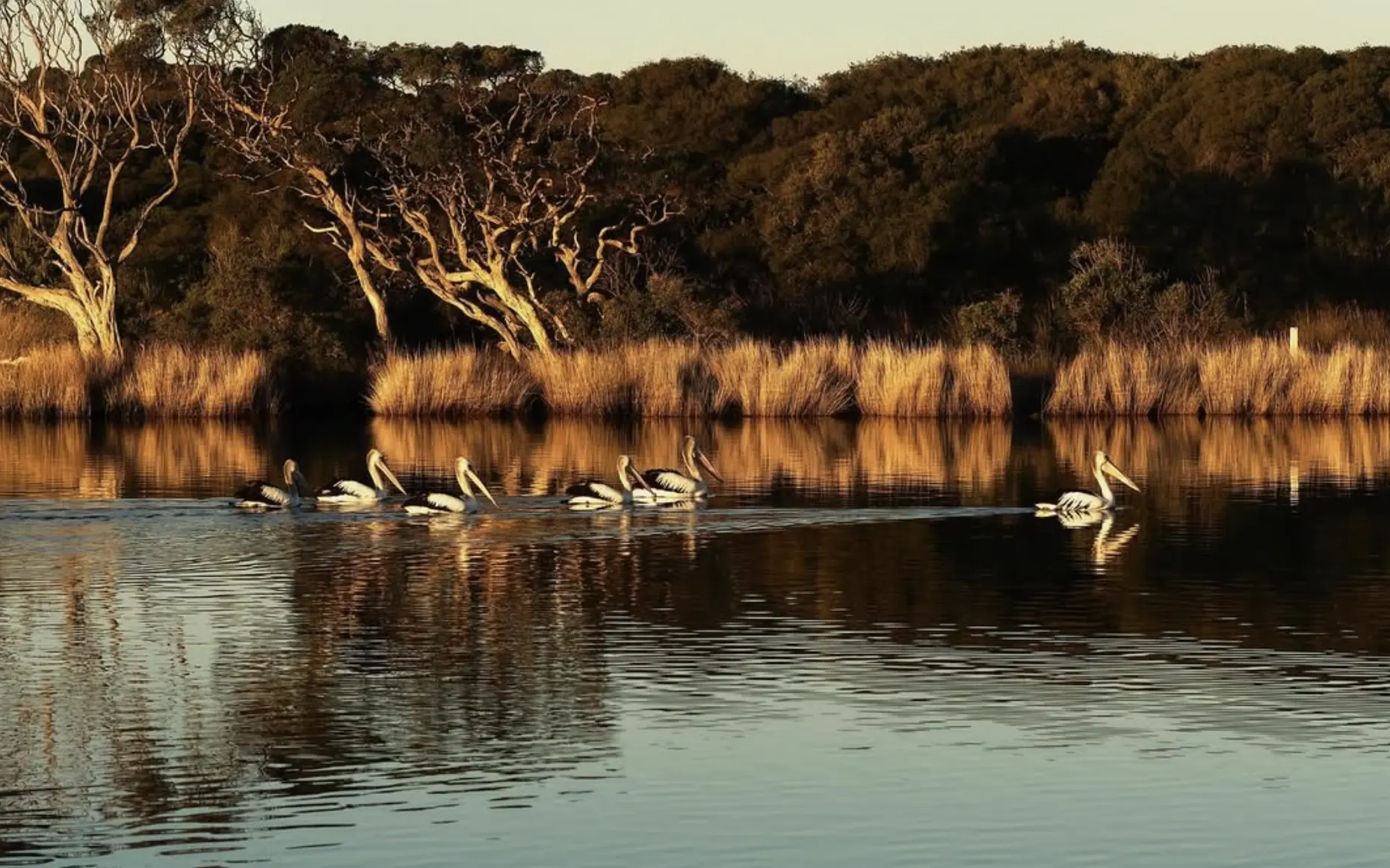
The river’s natural wonders go beyond the paddle. Gliding through flat water sections brings you face to face with native life — black swans, herons and the occasional rakali paddling through the reeds.
You’ll see:
Anglesea’s wetlands are home to over 120 bird species, making it a mini-paradise for all sorts of kayaking adventures that combine natural scenery with quiet observation. This is a shared Country, so always be respectful of the Traditional Custodians — don’t crowd nesting sites or disturb animals for photos.
Whether you’re solo or part of a family trip, you’ll find kayak hire and equipment to suit every paddler.
Prices generally range from $25–$35 per hour for singles and $40–$50 for doubles. Longer hires are negotiable, especially outside the busy Great Ocean Road weekends.
For those chasing something extra, Anglesea Paddle Boats offers themed adventures, like an hour ride on boats through Coogoorah Park, combining gentle movement with an enjoyable experience for kids.
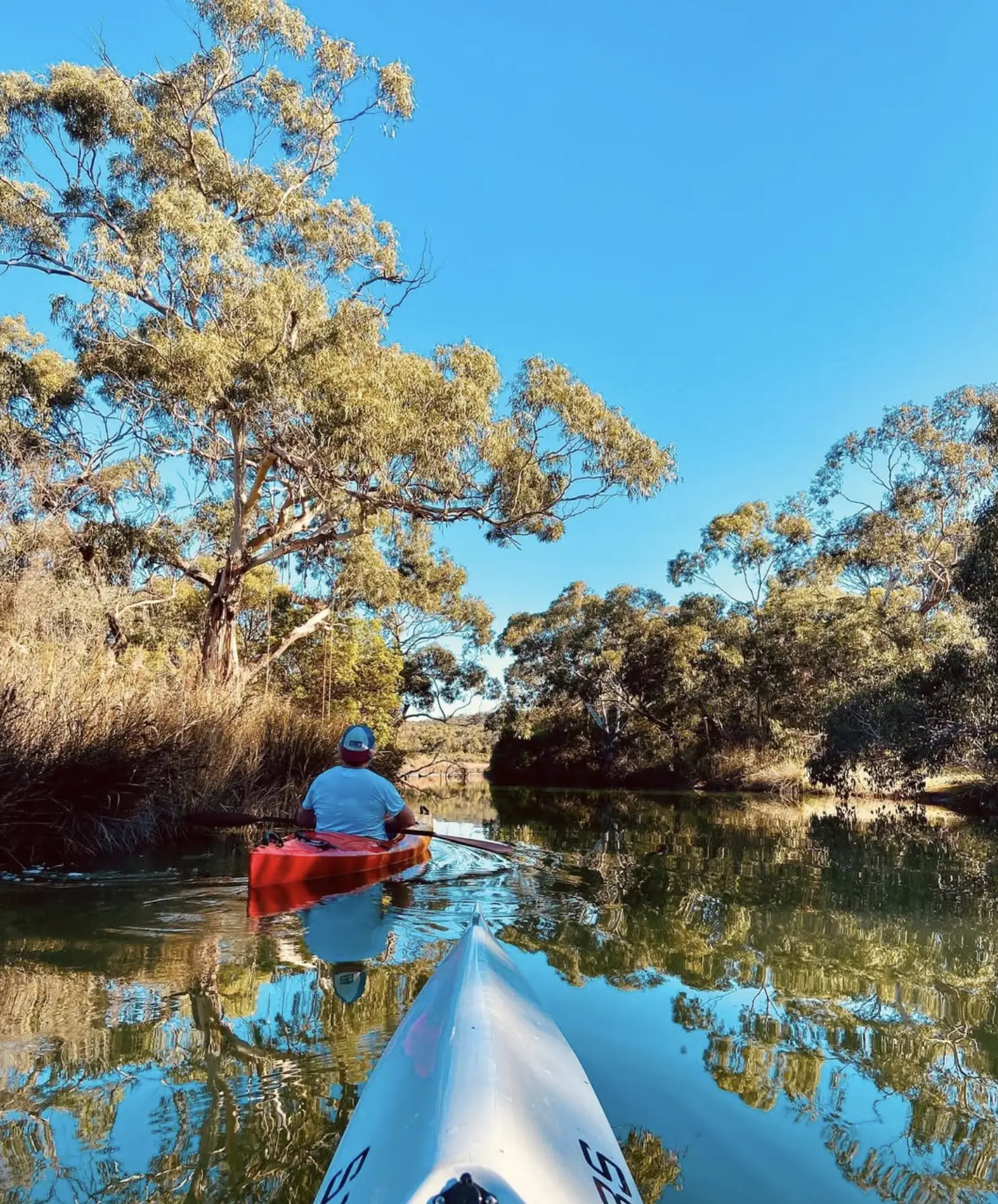
Timing is everything on the Surf Coast. The Anglesea River looks calm, but wind direction, rainfall, and tide cycles can turn a lazy paddle into a slog.
Seasonal Overview
Season | Conditions | Notes |
|---|---|---|
Summer (Dec–Feb) | Warm, light winds early, sea breeze later | Start before 9 a.m. to dodge crowds and wind |
Autumn (Mar–May) | Mild temps, calmer tides | Best season overall for glassy water |
Winter (Jun–Aug) | Cool, occasional rain | Quiet and peaceful, but bring thermals |
Spring (Sep–Nov) | Blooming bushland, nesting birds | Ideal for wildlife spotting |
Best time to paddle is 7–9 a.m. when the river’s still and the light’s magic. Avoid south-westerlies — they funnel straight up the estuary and make paddling upstream a pain.
Rainfall is around 85 mm per month in winter and 40 mm in summer, so after heavy rain, expect murky water and stronger flow. Local authorities sometimes close the mouth to stabilise salinity levels, so check with Surf Coast Shire Council or Parks Victoria if you’re unsure.
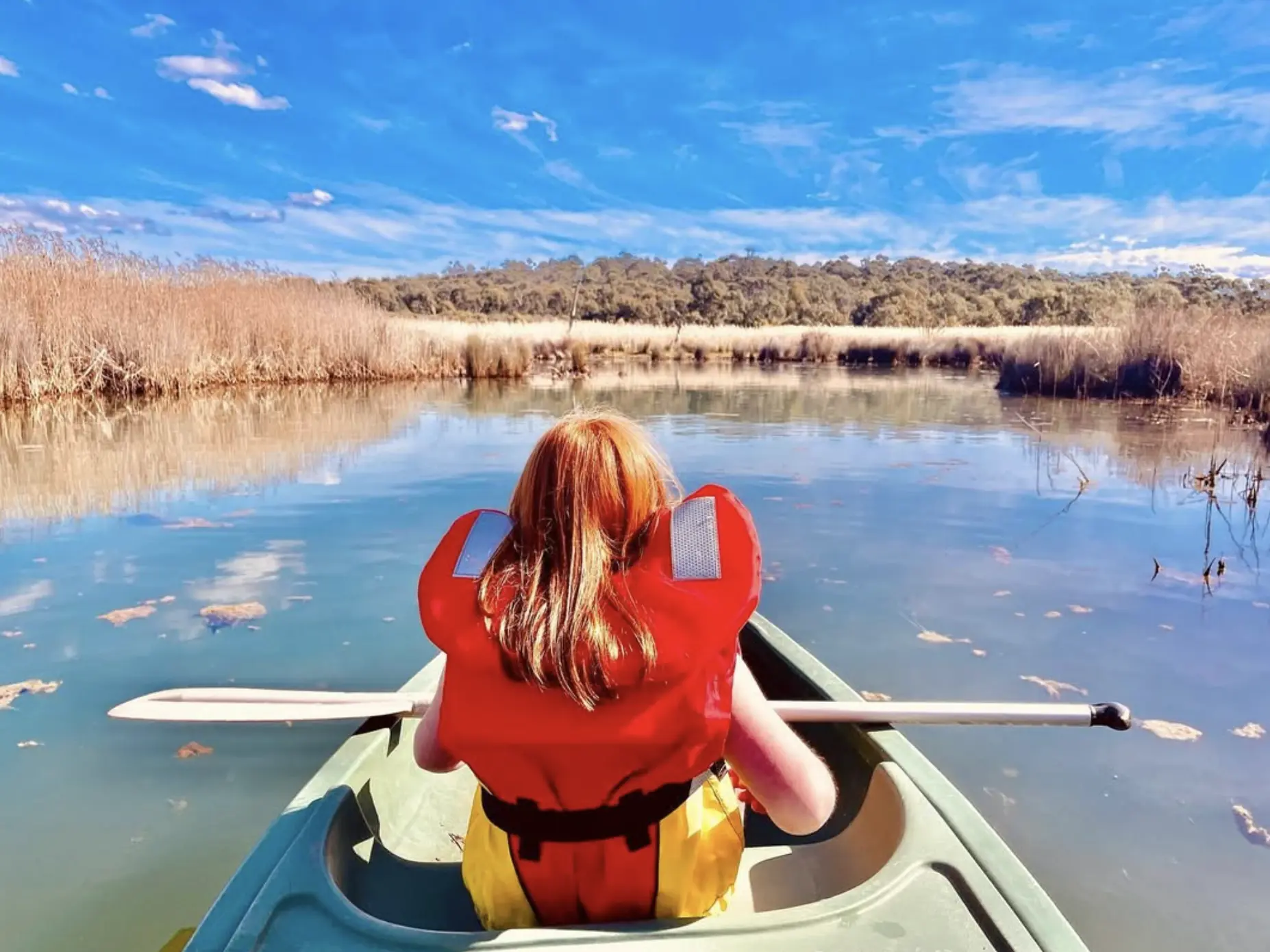
Even calm water deserves respect. The Anglesea River might look mellow, but shifting sandbars and cool waters can surprise the unwary.
1. Check The Weather And Tide
Use local forecasts or visit the centre for visitors near the Anglesea Riverbank.
Tides affect scenic routes — strong outgoing flow can challenge beginners.
Avoid paddling in extreme wind; the Surf Coast sea breeze can build fast.
2. Wear Proper Safety Gear
It’s not optional. Life jackets are mandatory for any vessel under 4.8 metres. Hire shops include this as standard.
3. Mind Your Surroundings
Fallen branches after rain can create obstacles.
Avoid paddling too close to the Anglesea Main Beach breakers unless you’re trying surf kayaking, suitable for experienced paddlers.
4. Know Your Limits
You don’t need a special permit to paddle, but if you join organised trips or community groups, check with Parks Victoria about seasonal guidelines.
5. Be Sun-Smart
The Great Ocean Road sun shows no mercy. Pack a hat, sunscreen and extra water — the basics that turn a hard day into a good one.
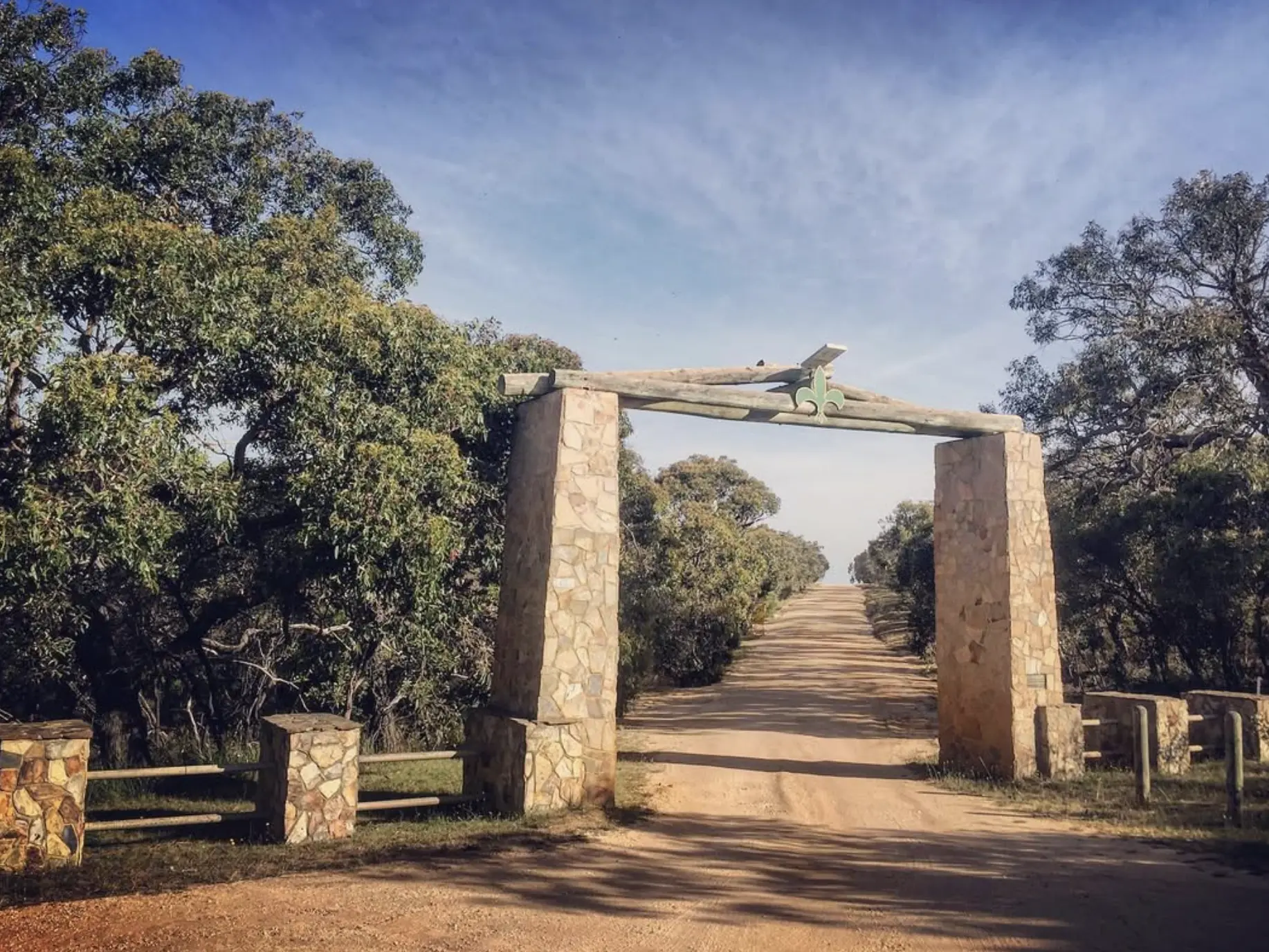
After paddling, explore the local attractions that make Anglesea a standout stop on the Great Ocean Road.
Anglesea Golf Club: Famous for its Eastern Grey kangaroos lounging across fairways.
Anglesea Main Beach: Combine your kayak adventure with a swim or try surf kayaking, suitable for intermediate paddlers.
Point Addis Marine National Park: 10 minutes east, beautiful beaches, rugged cliffs and ocean scenery that steals the show.
Great Ocean Road Chocolaterie & Ice Creamery: Post paddle sugar replenishment — or let’s call it recovery.
Jumpz Anglesea: A favourite with families looking to burn off excess energy before heading back to the Great Ocean Road Adventure trail.
For overnighters, local parks like Anglesea Family Caravan Park or Eumeralla Scout Camp are great bases. You’ll wake to kookaburras instead of alarm clocks — much better company if you ask me.