
There’s something quietly magical about Lake Elizabeth, a perched lake deep in the Otway Ranges. Tucked behind the small timber town of Forrest, it’s one of those places that doesn’t shout — it whispers. The air smells of damp tree ferns, mountain ash and moss; the water reflects mist like memory, and every track feels like it’s been there longer than the maps.
I’ve driven many people along the Great Ocean Road, but the detour inland to Lake Elizabeth Walk has always been one of my faves. It’s the kind of place that gets you into the forest’s rhythm — slower, quieter and a bit wilder than most expect.
To get to Lake Elizabeth, you’ll need to head inland from the coast into the Great Otway National Park, following Kaanglang Road from Forrest township. From Melbourne, it’s about a 2-hour drive (150 km) through Winchelsea and Birregurra before you start climbing into the ranges.
The final 3.5 km gravel section to the Lake Elizabeth Campground is a mix of potholes, puddles and postcard views. It’s Barwon River East Branch country — dense with ferns, tall gums and the kind of stillness that gets under your skin.
Along the way, you’ll pass through pockets of Otway State Forest, with lookouts and trailheads to Victoria Walks favourites like the Fern Gully Walk and Lake Elizabeth Circuit Walk.
Forrest’s general store and brewery is a good spot to stop for supplies. There’s no phone reception beyond town, so download your maps or bring a paper backup.
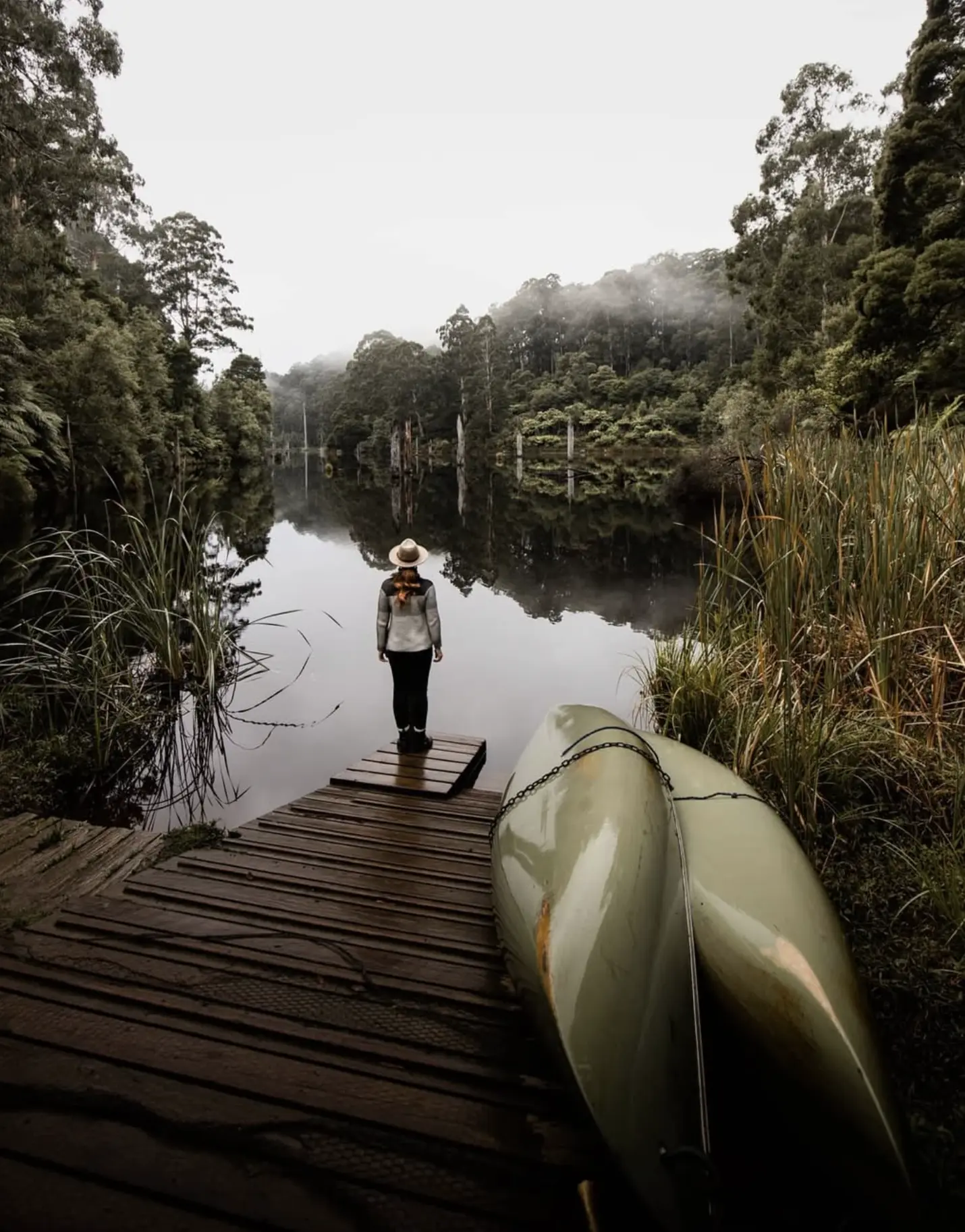
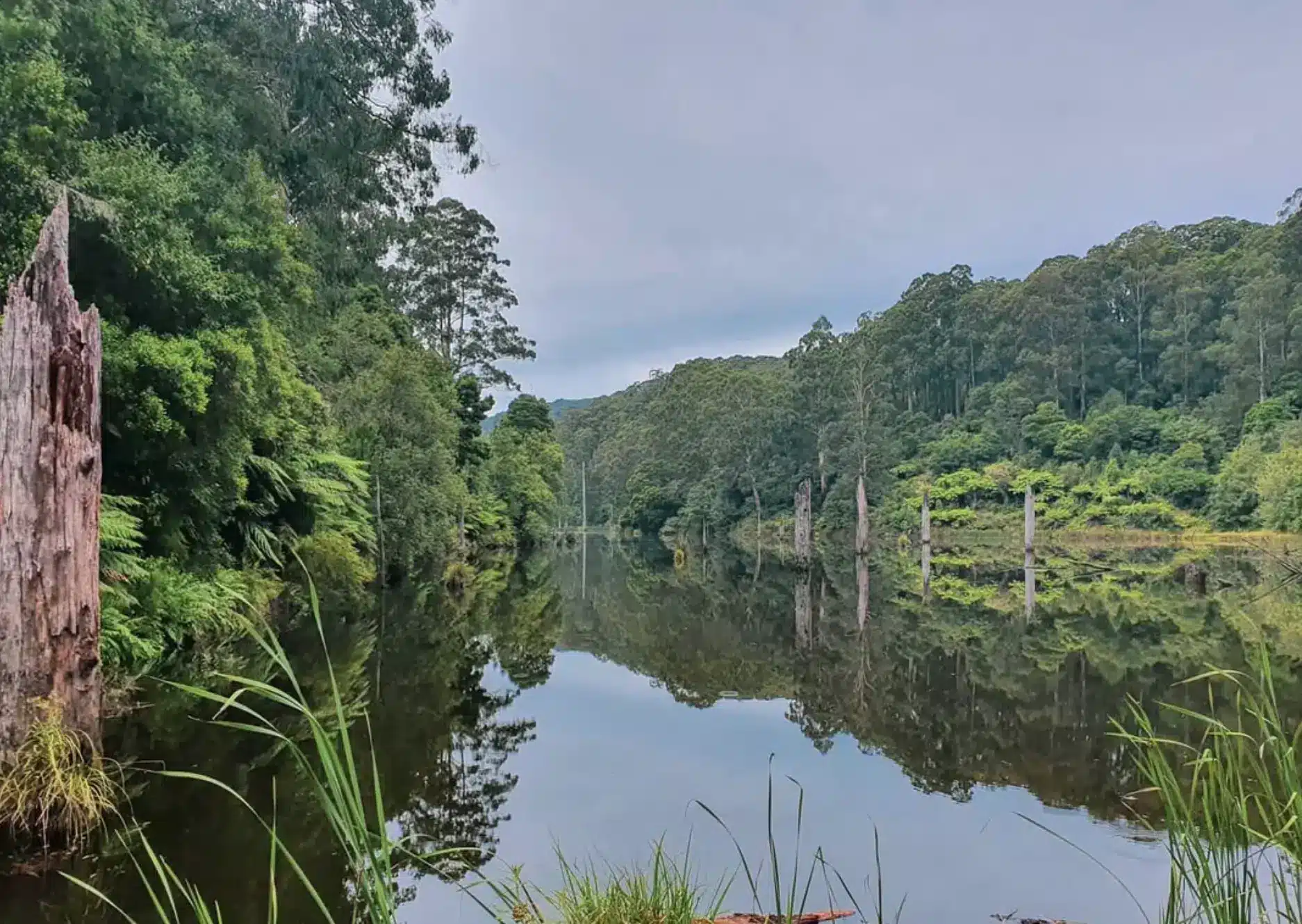
Lake Elizabeth isn’t an old lake like some of Australia’s inland lakes — it’s a young one. In 1952, after days of solid rain, a landslide blocked the East Barwon River and created the natural dam that flooded the valley. When the water settled, it left a long, narrow lake surrounded by dead tree trunks, ghostly and beautiful in the morning mist.
This is Gulidjan and Gadubanud Country, and like much of the Otways, it has stories deeper than the lake. As you walk here, you can feel the place sigh — the buzz of insects, the groan of trees, the slap of a platypus tail.
Here’s a snapshot of the lake’s vital stats:
| Fact | Detail |
|---|---|
Location | Near Forrest, Great Otway National Park, Victoria |
Formed | 1952 landslide blocking the East Barwon River |
Altitude | ~250 m above sea level |
Length | Approximately 1 km |
Average Depth | 8–12 metres |
Access | 3.5 km unsealed road from Forrest |
Facilities | Toilets, carpark, walking tracks, camping nearby |
Wildlife | Platypus, waterbirds, swamp wallabies, echidnas |
Ask any local and they’ll tell you Lake Elizabeth is one of the best places in Victoria to see wild platypus. It’s not guaranteed — nothing in the bush ever is — but your odds here are far better than most.
Get out early, just as the light starts to creep into the valley. Stand quietly on the viewing platform, about 100 metres from the carpark or continue along the loop track that hugs the shoreline. Look for the telltale ripple: a small circle expanding, a tiny brown hump surfacing, then vanishing again with a splash.
Pro tip: Don’t chase or call out — platypus are as shy as they come. Stay still, keep your voice low, and you might get lucky. Bring binoculars if you’ve got them, and avoid shining torches straight onto the water.
For the keen wildlife watchers, Great Ocean Road Tours runs small-group nature walks through this region, often combining the lake with nearby waterfalls and rainforest gullies. It’s a ripper of a day trip from the coast or the city.

There’s a small, well-maintained campground about 1 km before the lake carpark, tucked among the gums beside the East Barwon River. It’s basic — drop toilets, picnic tables, and fireplaces — but the setting makes up for the lack of luxury.
Bookings are managed through Parks Victoria, and it’s first-in, best-dressed during school holidays. Fires are only allowed in designated pits, and you’ll need to bring your own firewood. No showers, no power, and definitely no mobile signal — just birdsong and a sky full of stars.
For those who prefer a few more comforts:
If you’re camping, secure your food. The local possums are bold and will chew through anything that smells remotely edible — muesli bars, soap, or your tent if you’re unlucky.
The Great Otway National Park rewards preparation. Conditions change fast, and even a short walk can turn slippery in seconds.
Here’s what to remember:
The nearest emergency help is Colac Hospital, about 30 minutes away. Always let someone know your plans before heading into the bush.


Must-Haves
Nice-To-Haves
Seasonal Extras